

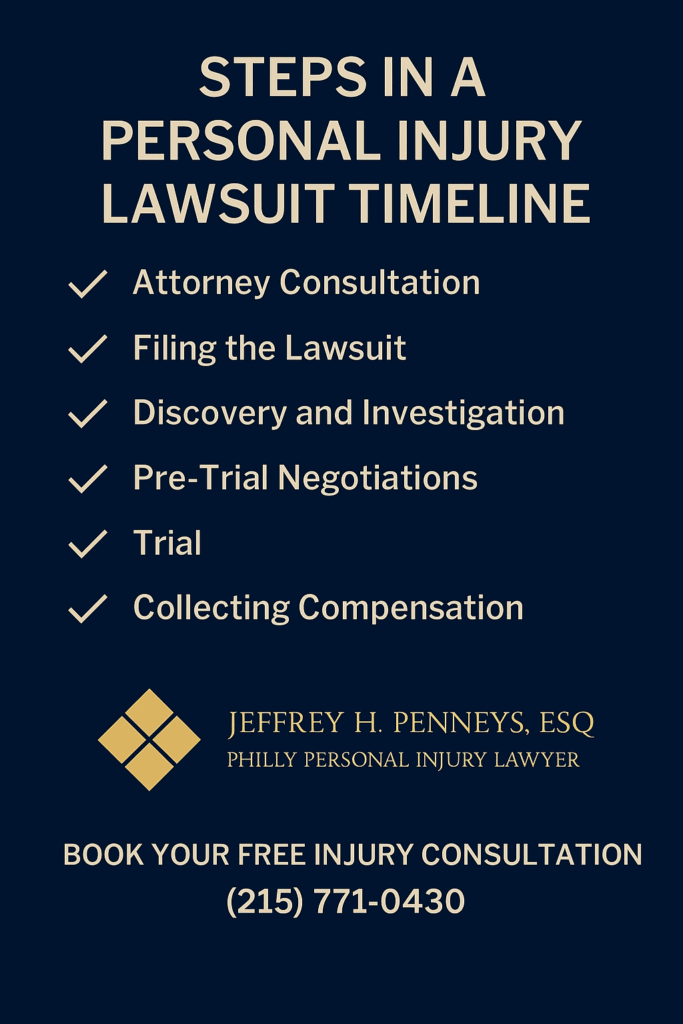
There is no average timeline for personal injury lawsuits. You may win a personal injury settlement months after you file. Or your case may go to trial, and require over a year for the jury to reach a verdict. Each personal injury lawsuit must proceed on its own merit to a settlement or court judgment. While there is no clear way to determine the timeline for personal injury lawsuits, there are clear steps within each lawsuit stage.
Hiring a Personal Injury Attorney
Hiring a personal injury lawyer early in the case offers several advantages. They can help you explain the next steps and the approximate time each step might take. An injury attorney can outline personal injury law and the actions the insurance adjuster may take by countering your claims. Lawyers can also handle each stage, allowing you to focus solely on recovering from your injuries.
Immediate Steps After an Injury (Days 1-7)
The clock starts ticking the moment you’re injured. In these crucial first days, take the following actions to preserve your injury claim.
Seek medical attention immediately.
Your health comes first, and medical documentation provides clear evidence for a potential injury lawsuit. Visit your local urgent care clinic or emergency room for diagnosis.
Report the incident.
Report your injury to the authorities. For auto accidents, file a police report. After slips and falls, report the incident to the property owner. If you’re hurt at work, confirm the injury with your employer.
Pennsylvania law requires that auto accidents resulting in injury, death, or vehicle damage preventing its operation be reported to police immediately. For workplace injuries, you must notify your employer within 21 days to receive benefits from the date of notification, or within 120 days to receive benefits from the date of injury.
Preserve evidence
Collect evidence, including photos, witness statements, and damaged clothing. Take pictures of the injury, gather witness information, and keep damaged property.
Don’t speak with insurance adjusters.
Unless otherwise advised by your injury attorney, don’t answer the calls of the insurance adjusters at this early stage.
Begin documenting your recovery.
You can preserve your rights to an injury settlement by documenting all medical visits, pain levels, and missed work due to your injury.
Personal Injury Investigation Phase (Weeks 1-8)
After hiring a personal injury attorney, they will immediately begin an investigation, coordinating your insurance paperwork, and reviewing settlement options. The investigation process includes:
Reviewing accident/incident reports
The injury attorney reviews the accident reports to determine each party’s liability for the damages.
Collecting and analyzing medical records
The lawyer will collect and analyze relevant medical records, reviewing the doctor’s notes to determine the extent of the injury and the doctor’s determination of the causes of injury. In Pennsylvania, you generally need to reach “maximum medical improvement” (MMI) before a lawyer can fully assess your claim’s value. This is the point where your condition has stabilized, though you may still require ongoing care.
Interviewing witnesses
Your lawyer will consult with witnesses to the accident during the investigation stage. They will document the witness’s view of the accident, including the roles of each party and the actions each party took, and then compare witness statements with other documentation, such as police reports.
Consulting with accident reconstruction experts
Accident reconstruction experts can help your attorney understand the causes of the crash. Reconstruction teams evaluate road conditions, actions of each party, and the capabilities of any vehicles involved to provide clarifying background data on the incident.
Analyzing insurance coverage
Pennsylvania follows a “modified comparative negligence” rule, meaning your compensation may go down by your percentage of accident fault, and you cannot recover compensation if investigators find you more than 50% responsible. Your attorney will review each party’s insurance coverage and determine the potential for a settlement.
Pre-Litigation Injury Claim Negotiation (Months 3-12)
Once your lawyer analyzes your injuries and damages, they will begin negotiating your claim with the opposing insurance company. The negotiating timeline includes the following steps:
Step 1: Your lawyer will send a demand letter to the liable person’s insurance company.
Step 2: The insurance adjuster will typically respond with a counteroffer.
Step 3: Your lawyer will respond to the counteroffer, and negotiations will continue until your lawyer believes you have a fair settlement figure.
Step 4: If you settle, you can confirm the offer, sign the deal with your lawyer and the insurance adjuster, and continue your injury recovery.
Note on insurance negotiation: Pennsylvania requires that auto insurers act in “good faith” when handling claims, giving claimants reasonable time to respond, and providing clear reasons for claim denials. Insurers who violate these requirements may face additional penalties.
Filing a Lawsuit (If Necessary)
If negotiations fail, your attorney will prepare to file a lawsuit. While it’s rare for personal injury claims to go to court, your lawyer must have experience in trial advocacy. Key considerations include:
The phases of filing a lawsuit include:
Complaint preparation
Your attorney will draft the legal document initiating your lawsuit. This document will include the circumstances of the case, the steps taken to resolve the claim, and details of the parties involved.
Formal filing
After preparing the filing, your lawyer will submit the complaint to the county court and serve the papers to the defendants.
Court selection
Determining the appropriate venue based on where the injury occurred, the parties involved, and the damages from the claim.
County courts hear cases with over $5000 and less than $15,000 in damages. Circuit courts hear cases with damages exceeding $15,000. Circuit courts are the venue for most personal injury cases that reach trial.
The Litigation Process (1-2+ Years)
Discovery phase (3-12 months)
The litigation process begins with the discovery phase. During discovery, your lawyer and the insurance firm legal team depose parties, witnesses, and experts. They write document requests and file medical examinations.
Mandatory arbitration or mediation
Pennsylvania mandates the alternative dispute resolution process. This process is one final option for resolving the injury claim through negotiations before trial.
Pre-trial motions and hearings (2-6 months)
During pre-trial motions and hearings, both parties file documentation to support their claims. The defense may file motions to dismiss the case or limit evidence, which your lawyer will counter during a courtroom hearing. Final settlement conferences occur at this stage as your lawyer and the opposing party discuss case value.
Trial (3-10 days)
Personal injury trials typically last between three and five days. The trial stages include:
- Jury selection
Your lawyer and the opposing legal team will select jurors following Pennsylvania law.
- Opening statements
The opening statement from your lawyer will explain the circumstances of the injury, the impact the injury has had on your day-to-day life, and the evidence they will present during the trial.
- Presentation of evidence and witness testimony
Your attorney will then cross-examine witnesses for the defense and present evidence linking your injuries with the defendant’s actions.
- Closing arguments
Both lawyers will present their closing arguments to the jury, explaining their legal reasoning and providing the jury guidance.
- Jury deliberation and verdict
As the process concludes, the jury will deliberate over the evidence presented and reach a verdict in your case.
The Appeals Process (12 months)
Injury lawyers and defense teams appeal the verdict within 30 days. The appeal is made based on existing evidence and under Pennsylvania law. If the losing party fails with the post-trial appeal, they may appeal to a higher court to review the trial court verdict.
- Collection and distribution of judgment
At the end of the appeal process, the Pennsylvania courts collect the judgment on your behalf and then distribute payment following the terms set at trial.
Special Considerations for Pennsylvania Injury Lawsuits
Limited tort vs. full tort insurance
If you selected “limited tort” on your auto insurance policy, you may be restricted from seeking compensation for pain and suffering unless your injuries meet certain thresholds.
No-fault insurance rules
Pennsylvania follows a “choice no-fault” system, which means your insurance covers your medical expenses regardless of fault. However, you can still pursue a liability claim against the at-fault driver.
Sovereign immunity
Claims against government entities in Pennsylvania, such as SEPTA, face additional restrictions and shorter filing deadlines. Generally, you have six months to provide notice.
30 Years of Experience Winning Injury Claims
If you’re hurt in an accident and unable to work or pay your medical bills, time is of the essence. Request a free case review with Philly Personal Injury Lawyer Jeffrey Penneys to begin fighting back and securing fair compensation for your injury damages.
Don’t navigate this complex timeline alone. Contact Jeffrey Penneys today by calling (215) 771-0430 or booking your case review online.