

Being involved in a car accident is a traumatic experience that can leave both physical and psychological scars. While many car accident injuries heal within weeks, some victims experience persistent pain that lasts for months or even years after the initial crash. In fact, the latest data from the Journal of Pain suggests 67% of car accident victims experience pain up-to two months afterwards. Ongoing pain can significantly impact your quality of life and may require specialized medical attention. Let’s review the steps to take if you’re experiencing pain months after a crash.
Understanding Persistent Pain After Car Accidents
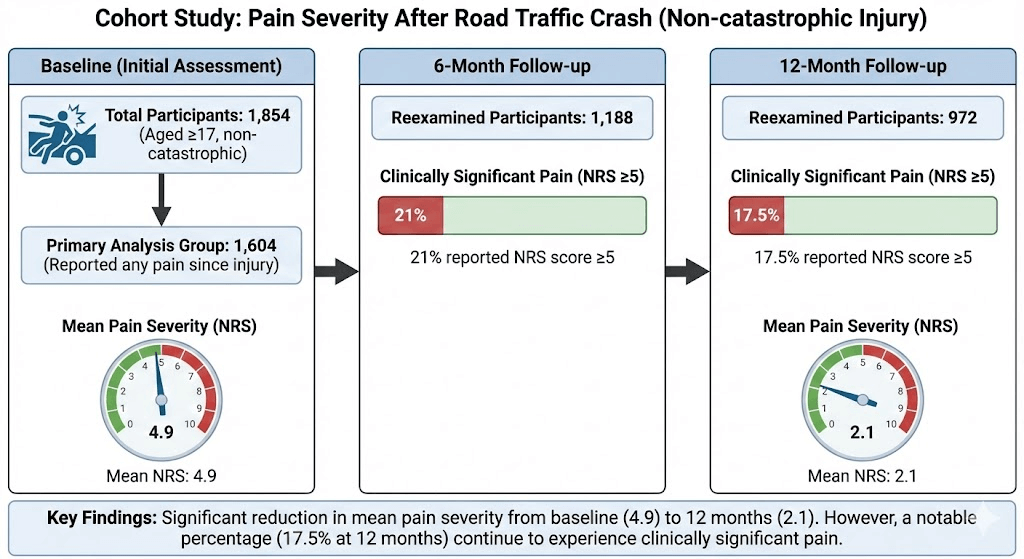
The latest research shows that 21% of car accident victims experience clinically significant pain up to six months after their accident.
Car accidents can cause a range of injuries that may lead to chronic pain:
- Whiplash and neck injuries:
Sudden impact can strain or tear muscles, ligaments, and tendons in the neck, often leading to long-term pain, stiffness, or reduced mobility. Chronic whiplash symptoms can include headaches, shoulder and arm pain, and difficulty turning the head.
- Soft tissue injuries
Muscles, ligaments, and tendons in the back, shoulders, or limbs may heal improperly, causing lingering aches, spasms, or weakness. Even minor strains can become chronic if untreated.
- Joint damage
Collisions can exacerbate or trigger arthritis-like symptoms in knees, hips, or shoulders. Post-traumatic arthritis can develop years after the accident, leading to chronic stiffness and discomfort.
- Nerve injuries
Compression or trauma to nerves during a crash can result in neuropathic pain that persists long after visible injuries have healed. Symptoms may include burning sensations, tingling, numbness, or shooting pains down the arms or legs.
- Complex Regional Pain Syndrome (CRPS
In rare cases, car accident trauma may trigger this chronic pain condition, characterized by severe, burning pain in a limb, changes in skin color or temperature, and swelling. Early recognition improves treatment outcomes.
Steps to Take If You’re Still in Pain Months After a Car Accident
1. Seek Specialized Medical Evaluation
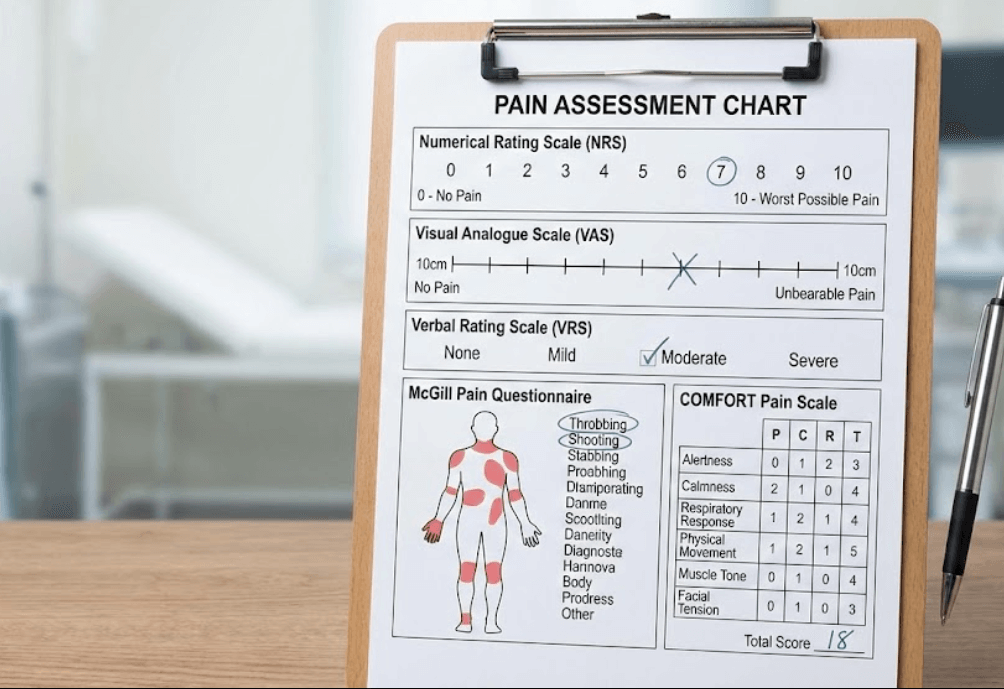
Persistent pain after a car accident warrants a careful, specialized evaluation. Chronic pain often develops when the body doesn’t fully heal, or when nerves and soft tissues are injured. Pain specialists can measure and track pain intensity using standardized tools:
- Numerical Rating Scales (NRS): Patients rate pain levels from 0 to 10 to provide objective insight into intensity.
- Visual Analogue Scales (VAS): Patients indicate pain along a line representing intensity, helping doctors quantify subtle changes.
- Verbal Rating Scales (VRS): Descriptions such as “mild,” “moderate,” or “severe” provide context for treatment planning.
- McGill Pain Questionnaire: Assesses pain location, type, and quality to help pinpoint sources.
- COMFORT Pain Scale: Useful for patients who cannot communicate pain clearly, including seniors or individuals with cognitive impairments.
Referral considerations: Your primary care physician may refer you to a pain management specialist for chronic pain therapy services. If the therapist suspects nerve damage, a neurologist can evaluate and treat any connected neuropathic issues. Orthopedic consultation may be necessary for joint, bone, or spinal injuries.
Research published in the Journal of Pain Research highlights that early intervention in chronic pain cases often improves long-term outcomes, so timely evaluation is critical.
2. Explore Diagnostic Testing Options
To understand the root cause of persistent pain, healthcare providers may recommend:
- MRI scans detect soft tissue injuries, including ligament tears, disc herniations, or spinal injuries.
- X-rays identify fractures, misalignment, or joint degeneration caused or worsened by the accident.
- Electromyography (EMG) tests nerve function and detects nerve compression or injury.
- Ultrasound imaging scans assess inflammation, soft tissue injuries, or blood flow issues.
- Blood tests can rule out systemic inflammation or underlying medical conditions.
Comprehensive testing allows doctors to target treatment accurately, rather than simply managing symptoms. Proper diagnostics can prevent long-term complications from unrecognized injuries.
3. Discuss Treatment Approaches for Chronic Car Accident Pain
Treatment for post-accident chronic pain is often multifaceted:
- Medication management: Anti-inflammatory drugs reduce swelling and pain. Nerve-specific medications such as gabapentin or pregabalin, and sometimes low-dose antidepressants, may help with neuropathic pain.
- Nerve blocks or injections: Cortisone or local anesthetic injections can relieve pain temporarily and help identify the exact source.
- Surgical intervention: Necessary for severe fractures, torn ligaments, or nerve entrapment that cannot heal naturally.
- Physical and occupational therapy: Physical therapy restores mobility, strength, and function, while occupational therapy helps adapt daily tasks to your pain limitations. Rehabilitation often includes posture correction, stretching, and strengthening exercises tailored to car accident injuries.
- Complementary therapies: Acupuncture, chiropractic care, or TENS (transcutaneous electrical nerve stimulation) units may reduce pain signals and improve quality of life.
Rehabilitation programs are especially important for restoring long-term function and preventing compensatory injuries that can develop when patients avoid movement due to pain.
4. Undergo Psychological Analysis
Car accidents are traumatic events that can cause anxiety, depression, or post-traumatic stress disorder (PTSD). Chronic pain often worsens these conditions, creating a feedback loop of stress and discomfort. Trauma-focused therapy or cognitive behavioral therapy (CBT) can help patients manage both emotional and physical recovery. Mental health support is an integral part of comprehensive care, helping victims regain confidence, reduce fear of movement, and improve overall quality of life.
5. Consider Your Legal and Financial Options
Managing chronic pain after a car accident can be costly and may impact employment or daily life. Keeping thorough records is essential:
- Document all medical visits, including treatments and prescriptions.
- Track work absences or reduced work capacity.
- Note how pain affects everyday activities and quality of life.
A car accident attorney can help you pursue compensation for long-term medical care, lost wages, and pain and suffering. Many victims are unaware that compensation may cover ongoing treatment and hospital bills.
Call a Pennsylvania Car Accident Lawyer With Experience Handling Chronic Pain Cases

If you or a loved one is experiencing persistent pain from a car accident injury, contact car accident lawyer Jeffrey Penneys at (215) 771-0430 or schedule a free consultation online.
Answers to Your Car Accident Pain Questions
Is it normal for whiplash symptoms to get worse before they get better?
Yes. Whiplash often starts with mild soreness but can worsen over several days as inflammation increases. Symptoms such as neck pain, headaches, shoulder pain, and reduced range of motion may intensify before gradually improving. If symptoms persist beyond several weeks, medical evaluation is recommended to rule out disc or nerve involvement.
Can a car accident cause delayed pain even if I felt fine at the scene?
Absolutely. Adrenaline and shock can mask pain for hours or days. Soft tissue injuries, concussions, muscle strains, and even spinal injuries may not cause severe symptoms immediately. Delayed onset pain—particularly in the neck, back, or joints—is extremely common and should be documented and evaluated by a doctor.
How do doctors diagnose the cause of my chronic post-accident pain?
Doctors may use a combination of physical exams and diagnostic tools such as MRI scans, CT scans, X-rays, electromyography (EMG), and ultrasound imaging. These tests help identify nerve damage, inflammation, disc issues, joint injuries, or soft-tissue tears that may be causing your ongoing pain.
When should I contact a lawyer about long-term car accident pain?
Contact a lawyer if your pain is affecting your daily life, ability to work, or financial stability. Chronic pain often requires long-term treatment, and victims may be entitled to compensation for medical care, lost wages, and pain and suffering. Speaking with an attorney early helps protect your right to full compensation and ensures your injuries are documented properly.
Can a car accident trigger chronic conditions like arthritis or CRPS?
Yes. Trauma from a collision can accelerate joint degeneration, leading to post-traumatic arthritis, which may cause long-term stiffness, swelling, and pain. In rare cases, a car accident can also trigger Complex Regional Pain Syndrome (CRPS), a severe chronic pain condition marked by burning pain, temperature changes, swelling, and extreme sensitivity in a limb. Early diagnosis greatly improves treatment outcomes.
What should I do if my pain is interfering with sleep or daily activities?
Persistent pain that disrupts sleep, work, or daily tasks should be evaluated by a healthcare provider as soon as possible. You may need specialized pain management, physical therapy, or diagnostic imaging to identify the underlying problem. Documenting the impact on your daily life can also strengthen any potential injury claim if you decide to pursue compensation for ongoing pain.